
The Center Is Not Where Power Lies
Controlling the center often paints a target.
The importance of occupying central squares is an undeniably heroic idea in chess, yet profoundly different in how we relate to it in practice. There is more space, more visibility, more room for piece maneuvering, and with all that power comes a sense of importance that craves recognition. Everyone wants to be central. What’s not to like?
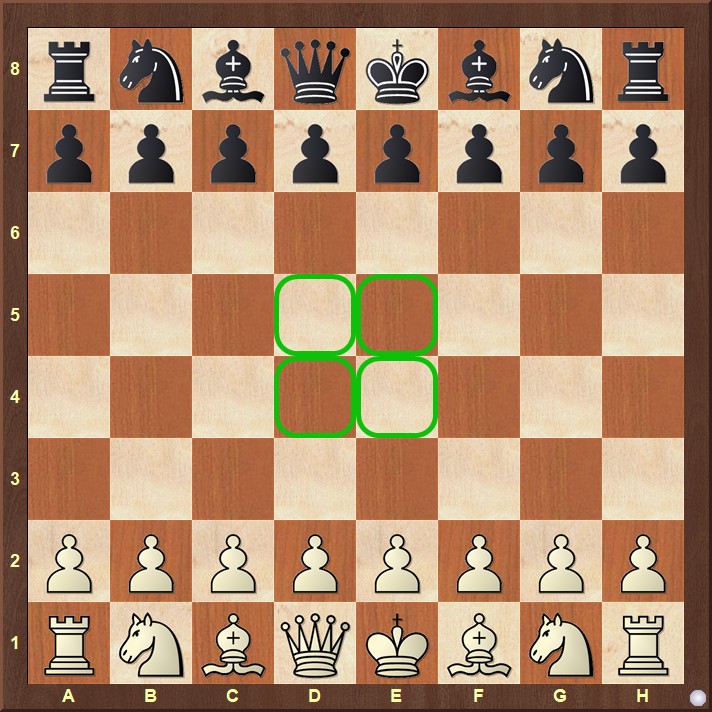
Central control pictures reflective inner stages on the board. The desire to influence, dominate, and live in an authority dreamland. It mirrors everything unsurprisingly human: the thirst for attention, validation, and being present amidst it all. The center feels powerful because it indeed is powerful. But visible strength that stems from it carries responsibility and consequences. The center is not all there is. Not so charming anymore, huh?
Longevity is where the irony begins. The moment the center is occupied, it becomes exposed. A moving target. A spotlight stage under constant observation. Those across the board, living on the sidelines, are rarely passive spectators. The dormant phase is just the beginning. They are watching, waiting, calculating. Quiet setups, like fianchetto structures, are not really intimidated by the center. Hardly stunned in awe. They are preparing to undermine it when the time is right.
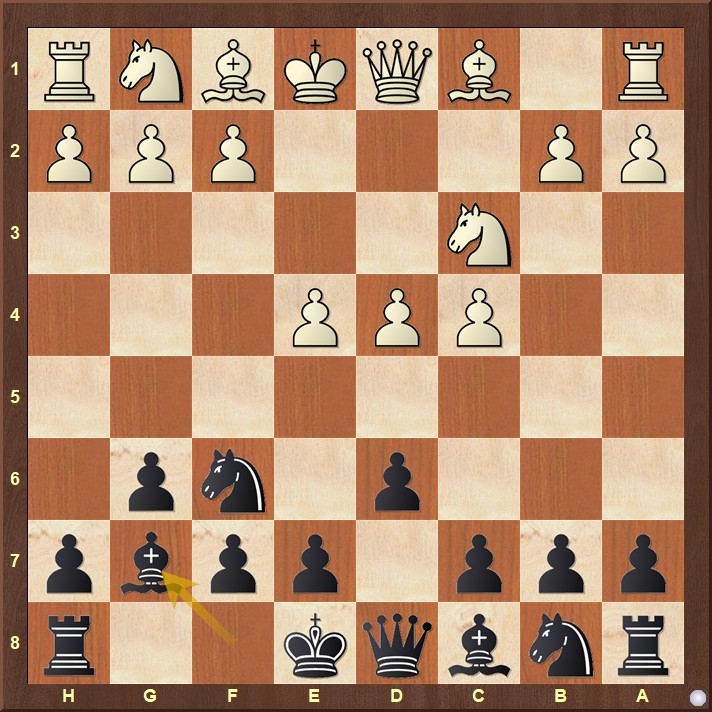
Fianchettoed bishop on g7 in the King’s Indian Defense.
The center is rarely conquered in an instant. The first step is almost always to challenge it. Pawn breaks like ...f5 for Black in the King’s Indian test whether White’s central presence can actually sustain itself. Whether the power is just talking too much, or if the praise actually makes sense. Undervalued strategies, perhaps, but highly resilient and cautious ones. Essential to fight for more freedom.
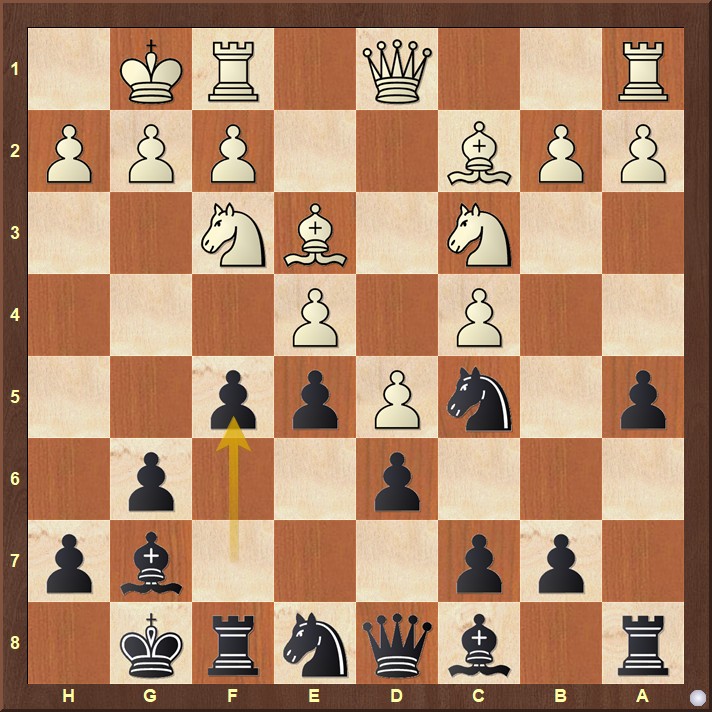
Challenging White’s center with the ...f5 pawn break.
This is exactly where many positions can take a turn. Pieces that once seemed cramped and unsure which direction to go in, in order to avoid competing for the same squares with others, suddenly gain activity and start aligning their forces. Space that, in essence, was just temporarily borrowed now begins to expand through proper pawn advances. The center, on the contrary, may start stretching too far in different directions. Overextension doesn’t come just from the player’s ambition or desire to finish it off quickly, but from an ironic sense of timing that is just not right for further pawn walks into enemy territory.

White pushes too far: center extended, king exposed, e5-pawn in trouble.
Still, the center remains fundamental. Controlling it makes life much easier to navigate. The pieces can experience more activity and contribute more efficiently. It just asks us to accept more responsibility and lower the urge for the spotlight. Stretching the position works only if the arising structure can hold it together with joined action. Central pawns don’t thrive on admiration, but on the rest of the crew. Coordinated backup. Rooks and queen connected behind them. Minor pieces ready to rotate and join the stage, not just observe the spacious beauty. A king placed safely enough so the position doesn’t collapse in front of him once the pressure arrives. And it inevitably will.
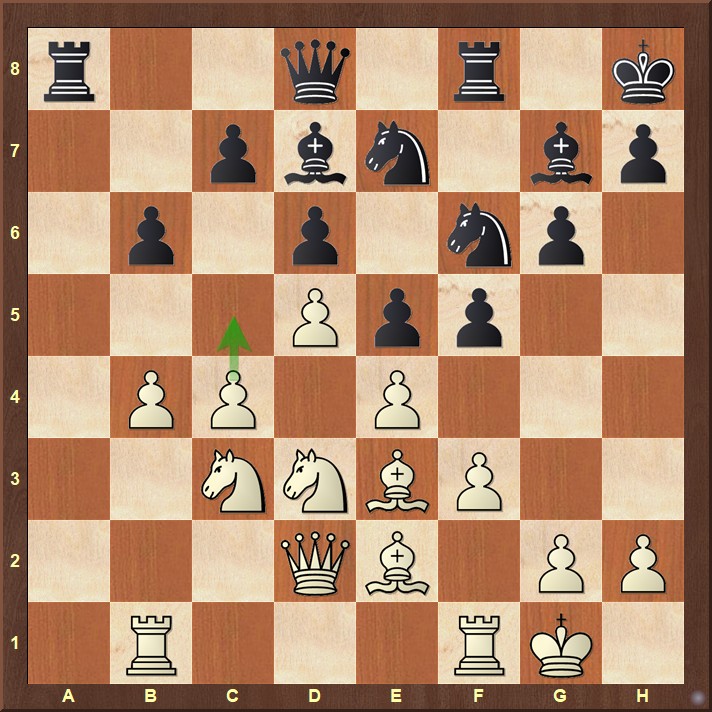
White’s pieces are ideally placed for further advances, like c5, targeting Black’s queenside weaknesses.
Piece coordination is the key to any strategy we work hard to materialize. The necessary ingredient to make it less spicy and more clear. Teamwork support offers the best influence on the board. It’s not the pawns on e4 and d4 that decide the game, but everything standing behind them. The remaining set of pieces that we should also learn to use.
Standing in the middle doesn’t generate power alone, but rather realizing when the center is a strength to be accompanied, and when it can crumble under the weight of testing forces.
You may also like
 WGM jovanaeric
The Comfort of Repetition
When repetition becomes a strategy. thibault
How I started building Lichess
I get this question sometimes. How did you decide to make a chess server? The truth is, I didn't. WGM jovanaeric
Zugzwang and Other Life Situations
So many human traits can be explored using a chess metaphor. When you take a more human-centered app… RuyLopez1000
AI Slop is Invading the Chess World
Claiming that AI can teach chess is the latest fad CM HGabor
How titled players lie to you
This post is a word of warning for the average club player. As the chess world is becoming increasin… WGM jovanaeric